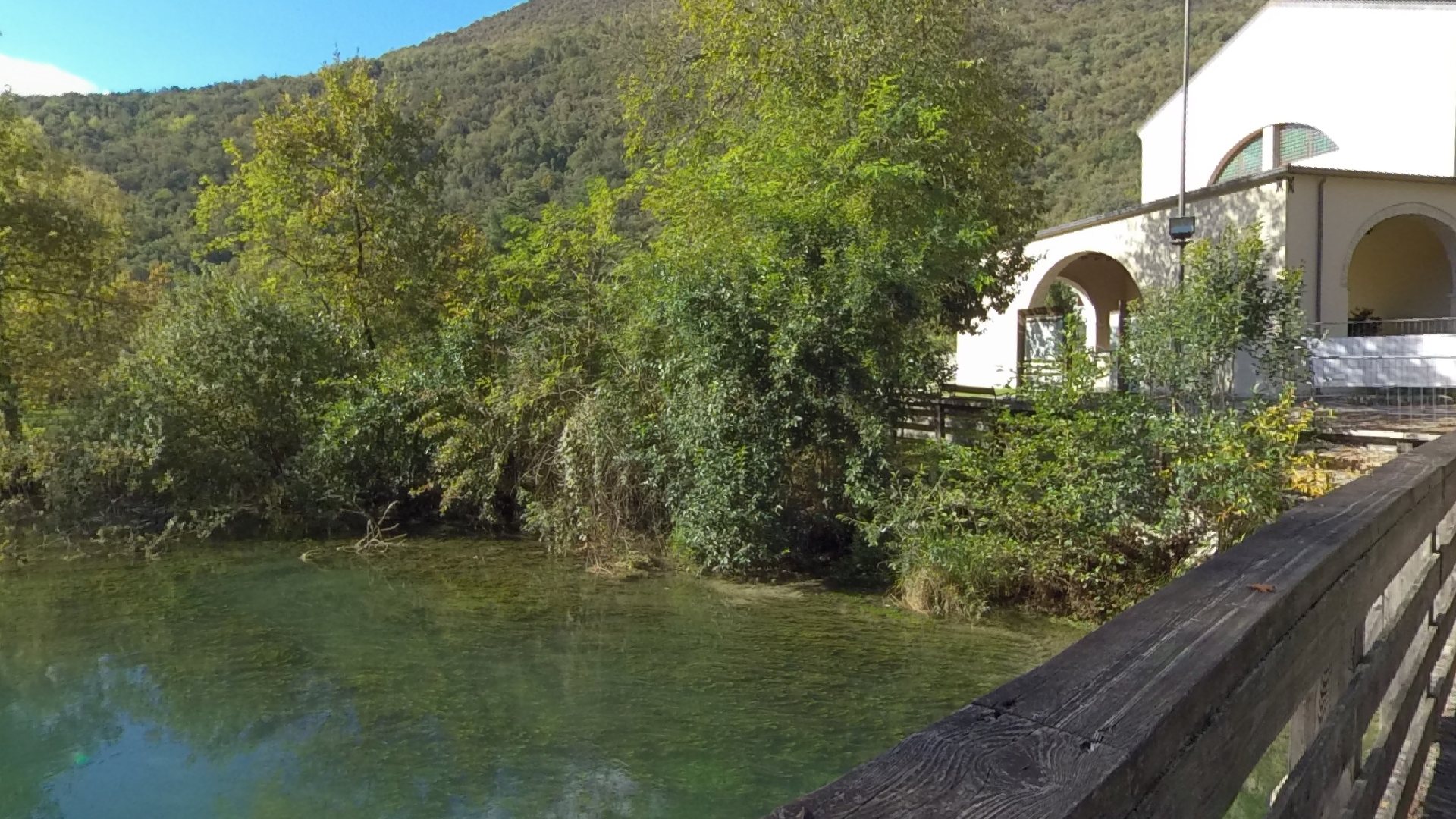
> The sources of the Livenza River <
A geosite of national importance
Spring n.
In geology, a spring is a natural point where underground water spontaneously emerges from the ground, reaching the surface. It can originate from aquifers encountering impermeable layers or from fractures in the rocks.
Videos and documentaries
Video stories and mini documentaries about the geosite’s places.
Explore
Sheet, audio guide and immersive environment for each place.
> The sources of the Livenza <
The sources of the Livenza River (the Gorgazzo, Santissima and Molinetto) are a site of significant geological, scientific and landscape interest, identified and protected as a Geosite by the Friuli Venezia Giulia Region in collaboration with the Department of Mathematics, Computer Science and Geosciences of the University of Trieste. All three arise at the base of the south-eastern slope of the Cansiglio – Cavallo karst massif, at an altitude of between 30 and 50 m above sea level, and form three branches that merge to generate the Livenza River.
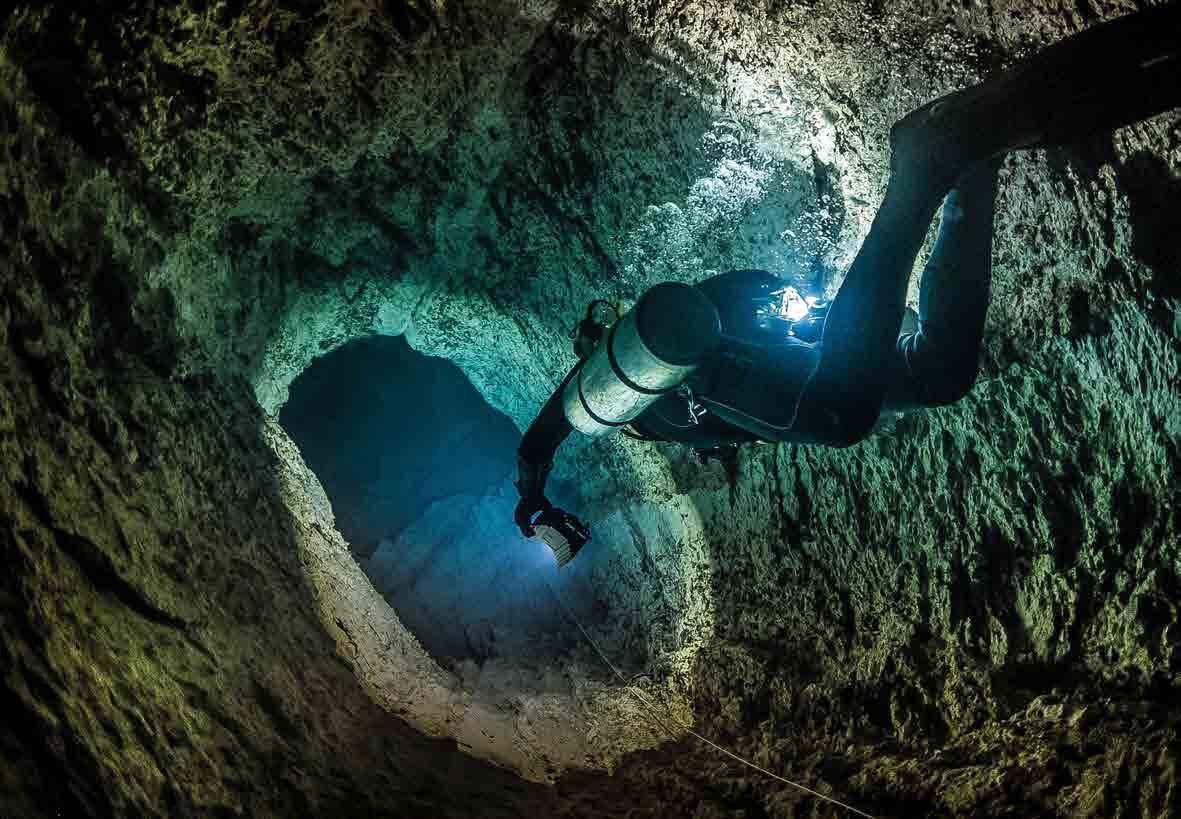
These represent the main emergence points of an extensive aquifer and, at a national level, one of the most interesting karst systems in Italy because all the rainwater collects on the Cansiglio - Cavallo plateau and flows into the depths through the fractures and numerous caves. In particular, the spring of the Gorgazzo is the second deepest vauclusian spring in Italy at 222 metres below ground level, and is laid out over about 700 m of galleries, mostly vertical. Scuba diving, after a long period of prohibition, is now regulated by a resolution of the Municipal Council n. 28 dated 16.04.2014.
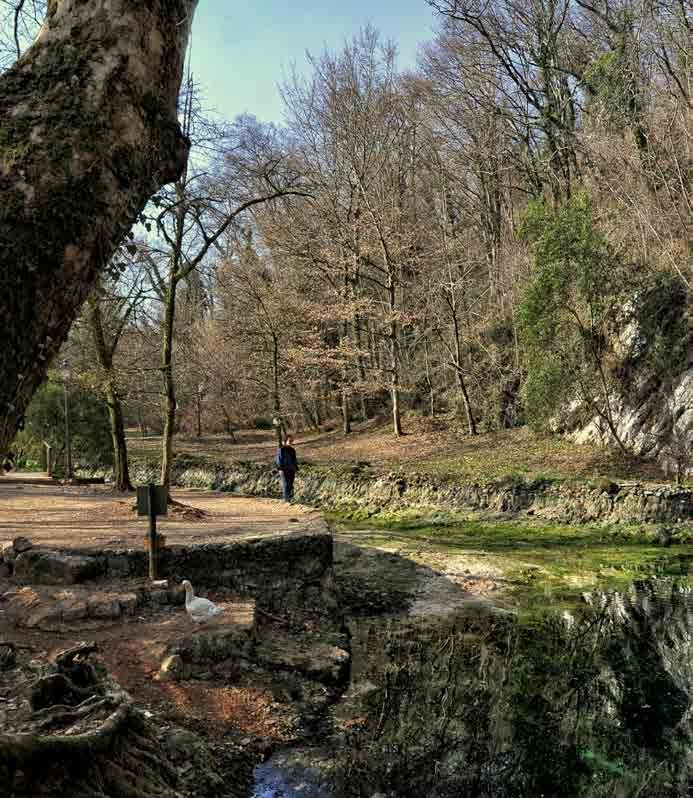
> The Gorgazzo <
The Gorgazzo, hidden among trees and rocks, is locally called “el Buso” and its clear and icy waters with a blue colour and countless reflections were described by Marinelli in 1877 as follows: “Take the colour of emerald, that of turquoise, that of beryl, throw them into a sea of lapis lazuli, so that everything merges and at the same time preserves its own originality and you will have the colour of that piece of liquid sky called the Gorgazzo!”.
Very technical and demanding underwater exploration efforts have been conducted by many cave divers from various national and international groups. The first dive, of which there is certain news, was carried out by a cave diver from the Circolo Idrologico Speleologico Friulano on 13th December 1964 to a depth of minus 21 m. In May 1967 G. Cobol reached a depth of -64 m, surpassed that same year by W. May, C. Hayes and S. Piccini, who reached a depth of -80 m. In 1987 L. Russo and M. Martini descended to -108 m. On 31st December 1992 the dives of the Swiss J.J. Bolanz and his team culminated reaching a depth of -131 m. On this last occasion L. Casati explored a branch between -90 and -104 m. Casati returned with his team in February 2008 and reached a depth of -212 m, making the Gorgazzo the deepest siphon cavity in Italy at the time. In 2019, the Polish cave diver K. Starnawski explored up to -222 m, leaving large galleries ahead of him.
> The Santissima and Molinetto springs <
The Santissima and Molinetto have an average annual temperature of 9.5°C and 11°C respectively. They are both springs due to the permeability threshold imposed by the underlying conglomerates, a “less permeable” geology, beneath the “more permeable” limestones. They both have permanent spring regimes, whilst the Gorgazzo spring is characterised by an irregular regime with high peak flows, which normalise after a few hours, while the Santissima and Molinetto have a continuous flow, limited oscillations in the water level, and longer flood exhaustion times. In 2007 and 2016, a tracing test was carried out by introducing the tracer into two caves located beneath the Cansiglio plateau, ascertaining the origin of the waters from this plateau with response times of about a week in the Santissima and Molinetto springs. No certain response was obtained from the Gorgazzo.