> Abisso del Col della Rizza <
The deepest cave in western Friuli: a system of shafts, canyons and galleries descending to −794 m and carrying the Cansiglio’s waters towards the sources of the Livenza.
From the guide
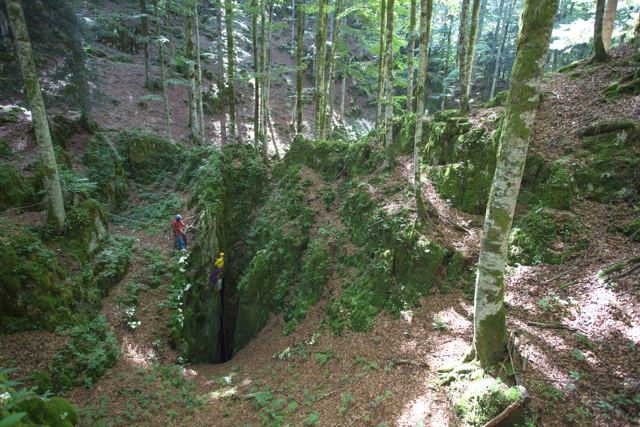
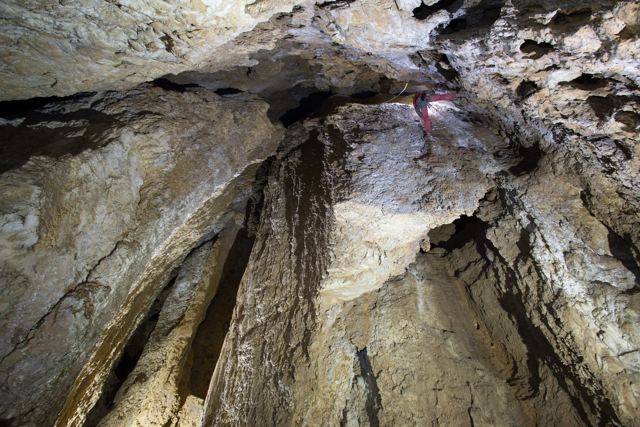
The Col della Rizza Abyss was discovered and explored in 1957 by members of the Società Alpina delle Giulie (Julian Alps Alpine Club) of Trieste to a depth of 116 m. It was revisited in 1972 for an updated survey, and finally in the 1990s, the Gruppo Speleologico Ferrarese, which arrived to conduct thesis research, explored it initially to a depth of 350 m. Finally, with the collaboration of several local speleological groups and others from central Italy, in the 2000s they reached a depth of 794 m. The abyss consists of a complex and intricate system of underground shafts and canyons with a planimetric length of 3,277 m. The entrance is located at 1,100 m above sea level at the bottom of an asymmetrical, funnel-shaped sinkhole. It has a 96-metre access shaft with an elliptical section, leading to one of the largest chambers in Cansiglio, measuring 80 metres in length, 30 metres in width, and 60 metres high. In 2020, members of the Gruppo Speleologico Sacile and the Unione Speleologica Pordenonese explored another major branch of the cave system, reaching a depth of 700 metres.
What it looks like
- Entrance shaft of about 96 m, elliptical in section, at the bottom of a a imbuto.
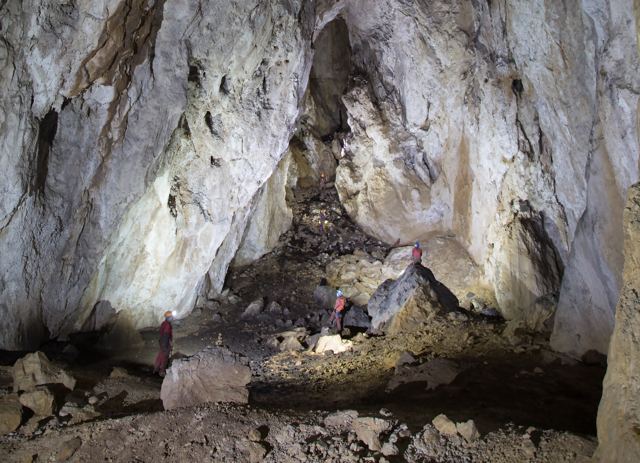
- At its base opens one of the largest halls in the Cansiglio (about 80 × 30 m, 60 m high).
- Further down are the Sala dei Ferraresi (−180 m), the Salone del Monolite and the Valeriana shafts.
- The bottom is closed by an unexplored sump; the Pandèmia branch descends to about −680 m.
Water and air
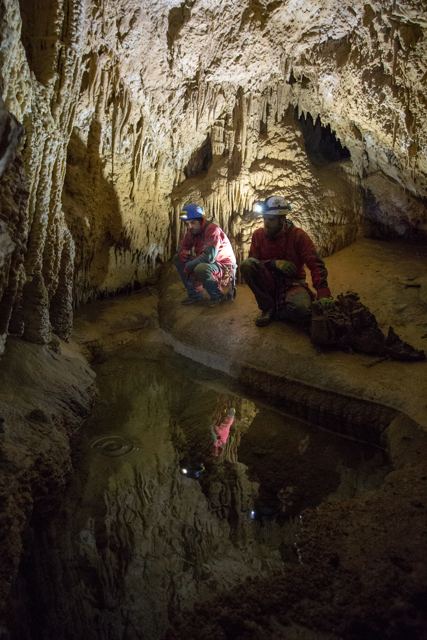
Ospita acque perenni, sifoni e torrenti interni; l’aria entra tutto l’anno. Un tracciamento con colorante del 2008 ha dimostrato il collegamento con due sorgenti del Livenza, con una velocità media di circa 250 m al giorno.
The cave is the subject of hydrogeological and geodetic studies of the Cansiglio karst aquifer (University of Trieste and other bodies).
History of the explorations
- 1957
First survey by the Commissione Grotte “E. Boegan” (N. Mauri, G. Bortolin)
- 1972
Survey update by the Società Adriatica di Speleologia
- 1994
The Gruppo Speleologico Ferrarese resumes explorations, first down to −350 m
−350 m - 2006
Several groups together reach the bottom at about −794 m
−794 m - 2018
New continuation in the Pandèmia branch
- 2020
Gruppo Speleologico Sacile and Unione Speleologica Pordenonese open a new route down to −700 m
−700 m - 2021
Survey update (F. Felici, GS Sacile)
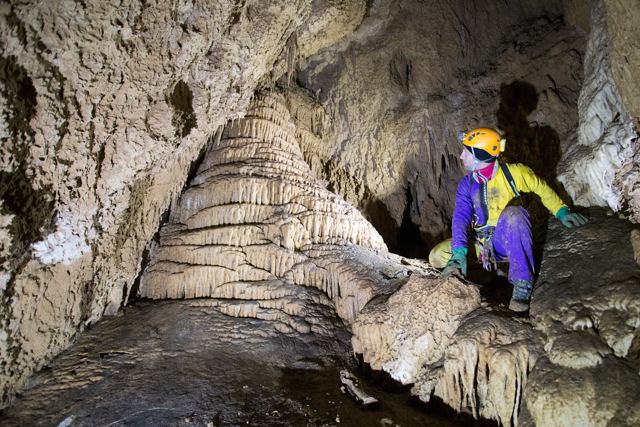
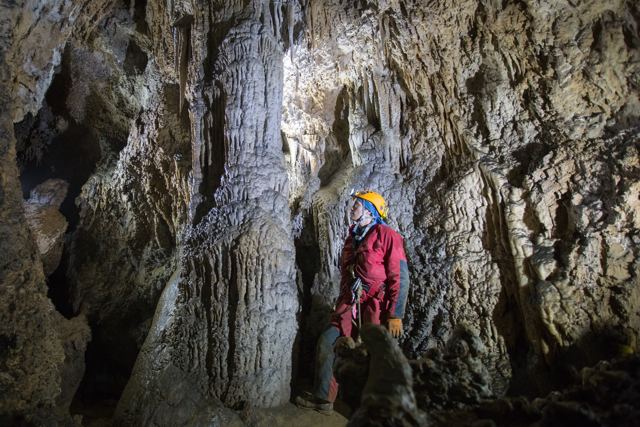
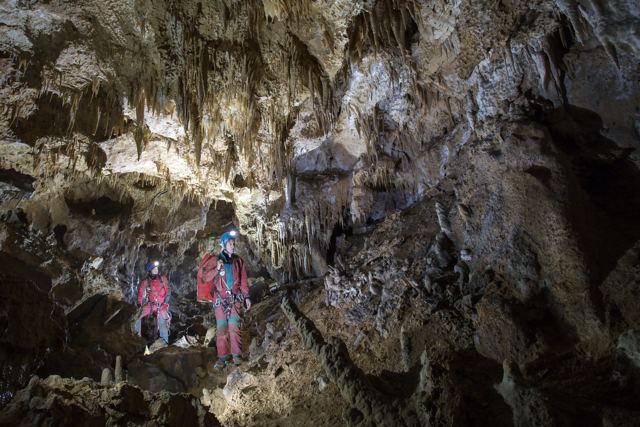
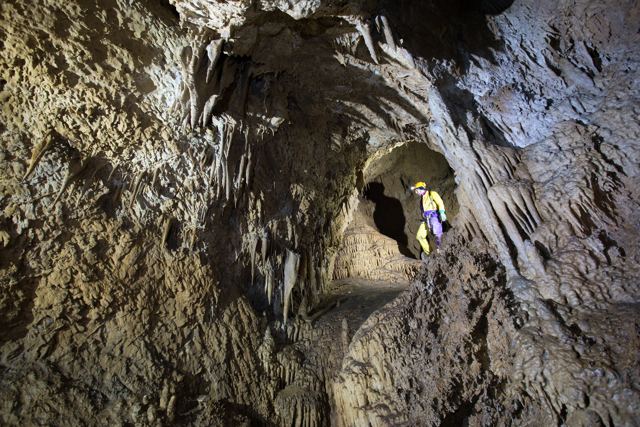
Inside Abisso del Col della Rizza
9 photos · Photo Sandro Sedran – S-Team. Tap a photo to enlarge it.